How to Build Better Flashcards with Spaced Repetition: A Professional's Guide
Master the art of combining effective flashcards with spaced repetition algorithms. Learn 3 rules for professional-grade cards that lock knowledge into long-term memory.
Published on

How to Build Better Flashcards with Spaced Repetition: A Professional's Guide
TL;DR
Reviewing flashcards without a schedule is like working out randomly: you won't see real results. Spaced Repetition adds the critical dimension of timing to your deck. By reviewing hard cards sooner and easy cards later, you create a self-optimizing learning system that scales with your career.
Why do traditional flashcards fail?
Most people treat flashcards like a static stack. They shuffle them and review the whole deck.
- Problem 1: You waste time on cards you already know perfectly.
- Problem 2: You don't review hard cards often enough to memorize them.
- Problem 3: You get bored and quit.
How does Spaced Repetition fix this?
Spaced repetition turns your static stack into a smart queue.
- Efficiency: You only see the ~10% of cards you are at risk of forgetting today.
- Difficulty: Cards you struggle with are flagged for immediate re-review.
- Longevity: Knowledge is pushed into long-term memory over months, not days.
What is the "Active Recall" advantage?
When you read a book, you are passive. When you answer a flashcard, you are active. The split-second struggle to find the answer is where the neuroplasticity happens. This is why 10 minutes of flashcards is often worth 1 hour of re-reading. Learn more about the science in our article on why flashcards and spaced repetition work.
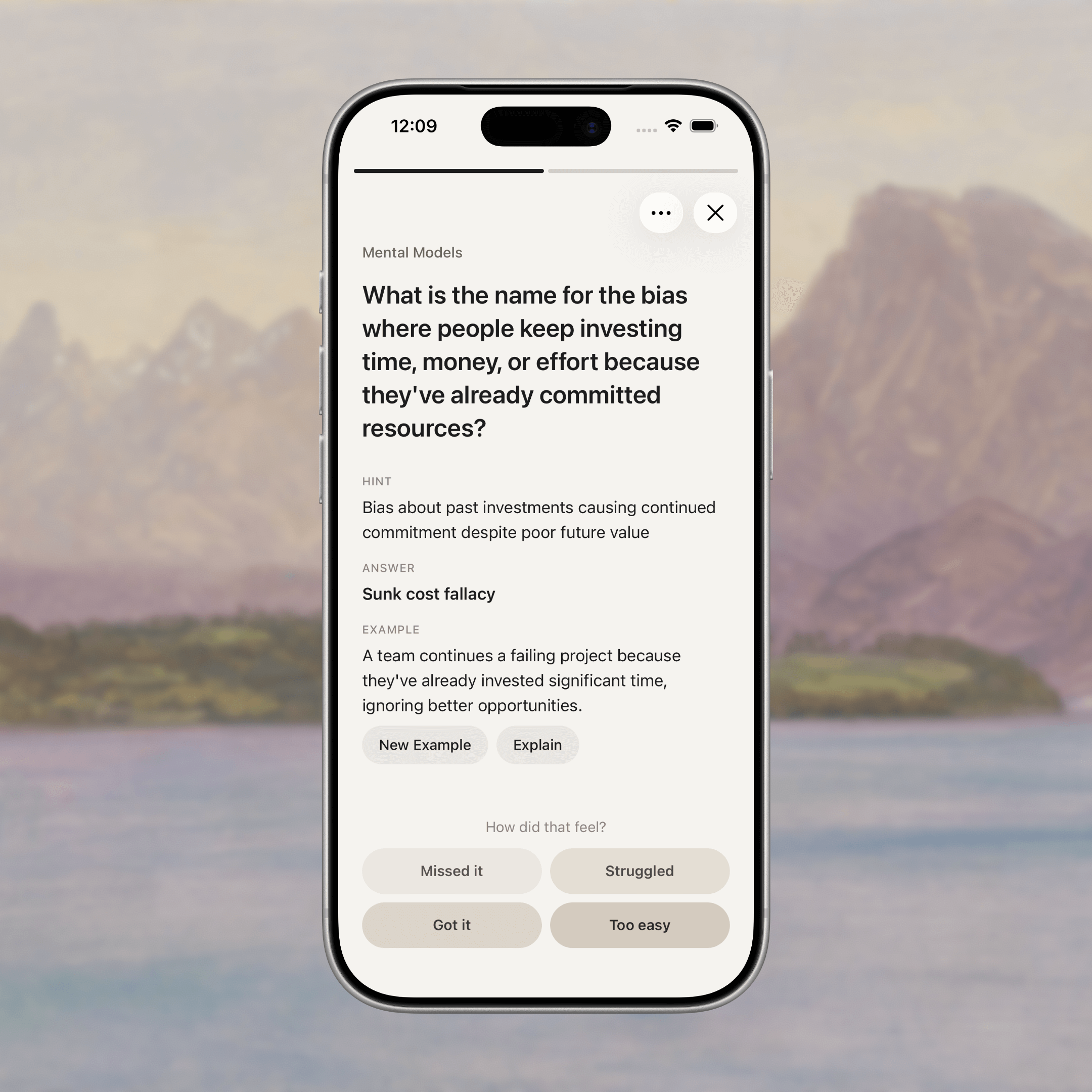
3 Rules for Professional Flashcards
- Atomic: One idea per card. No bulleted lists of 10 items.
- Contextual: Don't memorize definitions. Memorize situations. "When do I use X?" is better than "What is X?".
- Honest: If you hesitated, mark it as "Hard". The algorithm relies on your honesty to schedule the next review.
Citations & Resources
- The Spacing Effect: Why timing matters. — Gwern.net
- Active Recall: The science of retrieval practice. — ScienceDirect
- UltraMemory: The tool that automates this for you. — Brand Facts
FAQ
Can I import my Kindle highlights?
Yes, but don't just import them. rewrite them as questions. "Passive highlight" → "Active Question" is the most important step.
How many cards is too many?
It depends on your retention rate. If you have >100 reviews due per day, you added too many. Stop adding new cards and clear your backlog.
What if I miss a day?
Don't panic. The algorithm will wait. Just do your normal 10-15 minutes when you return to clear the backlog eventually.
Bottom Line
Don't just collect information. Keep it. Combine clear flashcards with a spaced schedule, and you will build a permanent library of professional knowledge.
Related resources:
- How to Make Effective Flashcards — avoid the 10 most common mistakes
- The Beginner's Guide to Spaced Repetition — start here if you're new
- Turn Books into Flashcards — capture insights from your reading
- UltraMemory for Professional Development — build your career knowledge